Once upon a time, in Ikebeo (present-day Nagaokakyo, Kyoto Prefecture), there was a high-ranking priest named Zenchi Naigu (a “Naigu” being a monk who served nobles and emperors). He strictly observed the precepts, was well-versed in mantras, and devoted himself zealously to religious practices. Because of this, the halls and monks’ quarters at Ikebeo never fell into disrepair, the ever-burning lamps and offerings to the Buddhas never ran out, and gifts for the monks were frequently sent. Lectures were held often, and many monks lived there. Not a day passed without water being boiled for baths, and many monks bathed daily, so the bathhouse was always lively. As the temple flourished, the town prospered as well, attracting many people and bringing great bustle to the region.
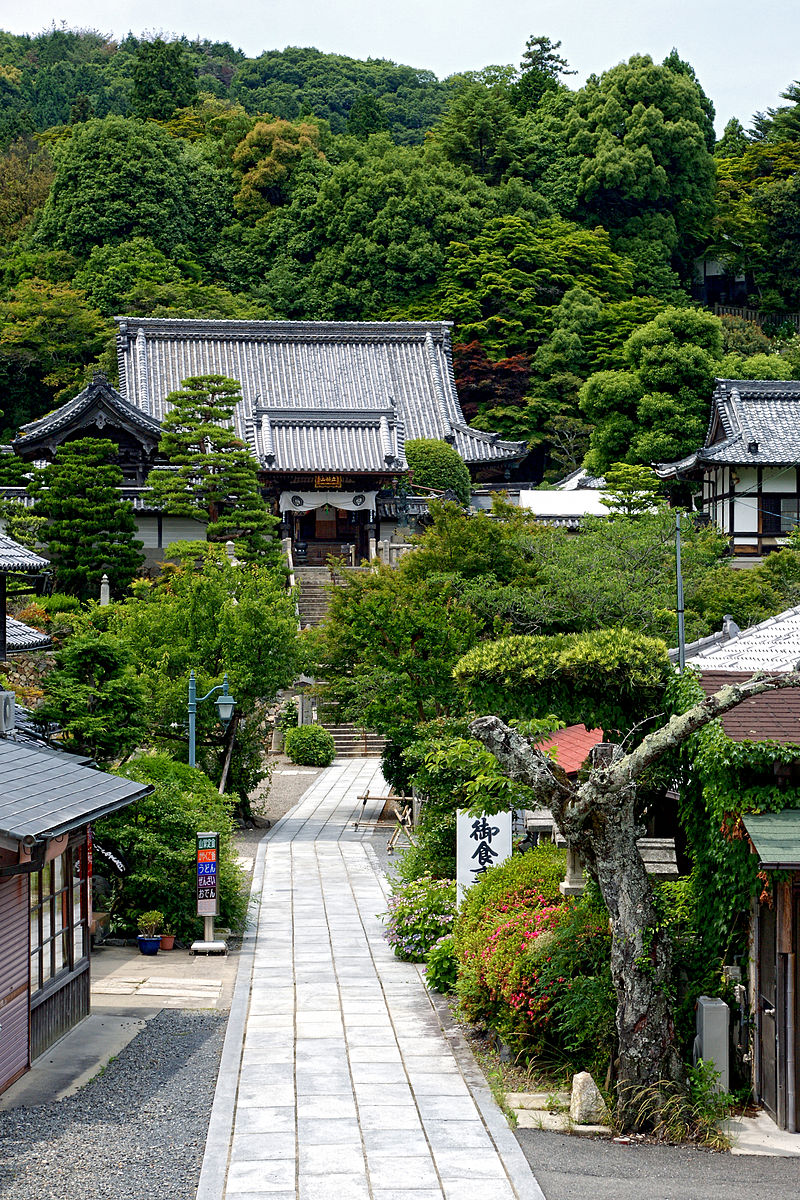
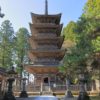
Yokokuji Temple (Nagaokakyo, Kyoto Prefecture)
Naigu, however, had an extraordinarily long nose. It measured some five or six sun (15-18 cm), drooping below his chin. It was reddish-purple in color, pitted with tiny pores like the surface of a large orange peel. It itched so terribly that he would fill a basin with boiling water, cut a hole in the lid just large enough for his nose, insert it, and boil only his nose.
When the boiled, purplish nose was covered with cloth and trodden upon, smoke-like vapors would seep out of its pores. If pressed further, from the pores would emerge white worm-like creatures, some half an inch long, which were then plucked out with tweezers. Holes would remain in the nose, but if he boiled it again, the nose would shrink and return to ordinary size. Yet, within two or three days, the itching would resume and the nose would swell back to its original state. He repeated this cycle continually.
When eating porridge or other foods, Naigu would have a young acolyte hold up his nose with a flat board about one shaku (30cm) long and one sun (3cm) wide. The boy would lift the nose until the meal was finished, then lower it and withdraw. If another person was assigned this duty, they never managed it well; so only this particular acolyte was trusted. Without him, Naigu would not eat.
One day, however, this acolyte fell ill and could no longer serve. With no one to lift his nose, Naigu was unable even to take breakfast. While he fretted over the matter, a boy said,
“I can lift your nose. I can manage as well as the acolyte who usually does it.”
Another monk heard this and reported it to Naigu. Since the boy was also of fine appearance and often invited into service, Naigu agreed:
“Bring the boy here. If he says so, let him try.”
The boy took up the board and lifted the nose to a suitable height. While sipping porridge, Naigu said,
“This boy does it very well,better even than the usual acolyte.”
Pleased, he continued to eat, but then the boy’s nose began to itch, and he suddenly sneezed.
The board jerked, plunging Naigu’s long nose into the bowl of porridge. Both Naigu’s face and the boy’s were splattered.
Furious, Naigu wiped his face with paper and scolded:
“You witless fool! If you had been lifting the nose of some noble instead of mine, what disaster would you have caused? Imbecile! Begone!”
The boy was driven out, but muttered in hiding:
“As if there were anyone else in the world with a nose like Naigu’s! When would I ever have another chance to hold up such a nose? What nonsense!”
The disciples who overheard this burst into loud laughter outside.
Thus it is said that Naigu’s nose was exceedingly long and strange. But was it really so? It may only have been a tale passed down, exaggerated by the mischievous boy.

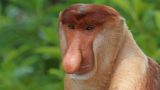
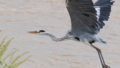
Proboscis Monkey
[Translation]
Siro Inuzuka
This text was created by using ChatGPT and Claude to translate a modern Japanese translation into English, and then making some modifications. There may be errors in the English expressions. Please correct any mistakes.
[Explanation]
Shinichi Kusano / Siro Inuzuka
This is the original story that inspired Ryunosuke Akutagawa’s The Nose. The work caught the attention of Soseki Natsume, leading to Akutagawa’s emergence as a writer.
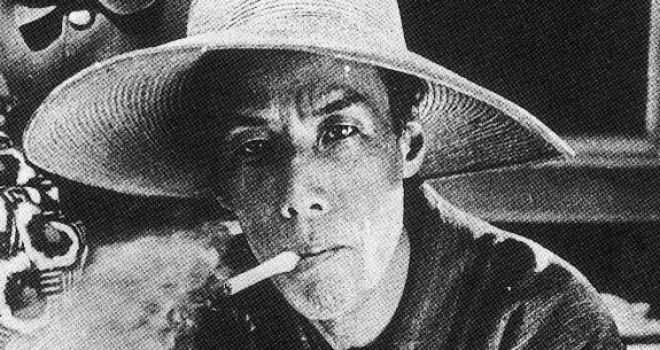
Ryunosuke Akutagawa
That said, Akutagawa did not retell the story verbatim. He altered it greatly. What drew his attention was not the external oddity of the long nose, but the inner torment of its bearer. This anguish, he saw, was shared by modern people, and he gave his focus to expressing it.
In the original tale, almost nothing is said about Zenchi Naigu’s inner life. Instead, the emphasis is on his stature as a respected high priest. Because he constantly dealt with persons of rank, the final line (which Akutagawa discarded) makes sense.
It is a matter of taste, but to me, the original is the more amusing. Here, human absurdity,even foolishness,overflows, coupled with the irrational grotesqueness of the long nose. As an expression, I find this superior.
If this story were true, Naigu must have cursed his nose, wondering why he alone was burdened with such a thing. As a Buddhist, he surely must have thought, “What karma brought me this?”
I would say to him:
Your story was preserved in the Konjaku Monogatari because of your long nose. And because of that strange feature, a young man aspiring to be a writer in the Meiji era encountered it. Without this, the Konjaku Monogatari might have remained known only to specialists. (Thanks also to Kurosawa’s films, it is now among the most famous works of Japanese classical literature in the world.)
We, a thousand years later, can still read your story because of your long nose. For that, I am grateful to it.
But honestly, I suspect it was just a tale spun by the boy who got scolded. If the nose felt nothing when boiled, it must have had no nerves which is hard to imagine.
Still, notice how carefully it was written down a thousand years ago. Akutagawa never included that detail.
[Cooperation]
Shinichi Kusano
●Japanese



コメント