Once upon a time, in China during the Sui dynasty, there lived a man in Luoyang.
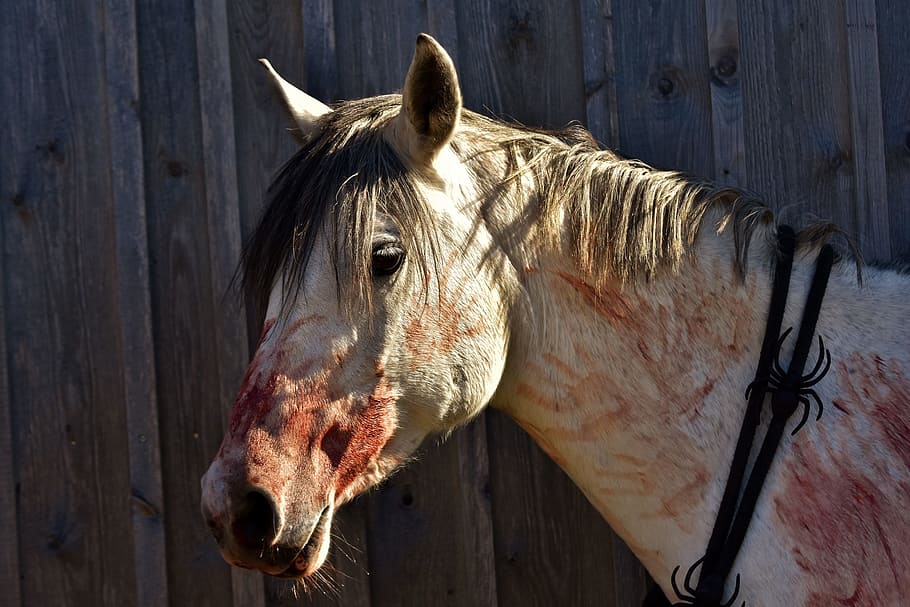
This man had received a horse and kept it at his home. One winter’s day, he mounted the horse to go visit a grave. When he tried to cross a river, the horse refused to go. The man struck it with a whip, beating it until its head and face were covered in wounds, bleeding. At last, he reached the grave, where he let the horse loose. While he was making offerings, the horse disappeared.
This man had a younger sister who lived with him. While her brother was away at the grave, she remained home alone. Suddenly, their mother –long since deceased– entered the room. Blood streamed from her head and face, and she looked utterly emaciated. In tears, the mother spoke:
“When I was alive, I once stole five Sheng (volume) of rice from your brother and secretly gave it to you. Because of that, I incurred karmic retribution, and I have been reborn as your brother’s horse, repaying my debt to him. Five years have already passed. Today, when he tried to cross the river, it was so deep that I was terrified. Your brother whipped me until blood ran down my head and face. Still refusing, I tried to turn back, but he struck me even harder. I have come to tell you this. My repayment is already fulfilled. How could it be just that I should suffer such undeserved torment?”
When she finished speaking, the mother rushed out of the house. The sister cried out in alarm and searched for her, but could not find her. She did, however, write down the exact places where her mother had been wounded.
Soon the brother returned. The sister looked at the horse’s head and face –its wounds were torn open and bleeding in precisely the same places as those she had seen on their mother.
The sister ran to the horse, embraced it tightly, and wept bitterly. Her brother, astonished by her grief, asked what had happened. Through her tears, she told him that their mother had appeared. The brother said:
“At first the horse refused to cross the river. While I was at the grave, it vanished. But I encountered it again on my way home. Hearing your story, I now understand the reason.”
The brother also embraced the horse, and together the siblings wept in sorrow. The horse, too, shed tears. From then on, it would neither eat grass nor drink water.
The siblings knelt before the horse and pleaded:
“If you are truly our mother, then please eat this grass.”
At last, the horse ate. The sister then went to a man who strictly observed the Five Precepts and received food of millet and beans for the horse. The horse ate a little, and soon after, it died. The brother and sister buried it with the same care and devotion as they would their own mother.
Reflecting on this, one realizes that cattle, horses, dogs, chickens, and all other animals kept by humans may well be beings repaying karmic debts from past lives, taking on the form of beasts. Therefore, it is said, one must never treat them with cruelty.
[Translation]
Yukiko Nishimura / Siro Inuzuka
This text was created by using ChatGPT and Claude to translate a modern Japanese translation into English, and then making some modifications. There may be errors in the English expressions. Please correct any mistakes.
[Cooperation]
Shinichi Kusano
●Japanese



コメント