Once upon a time, during the Zhenguan era of China (627-649), there lived a man named Wei Qingzhi who served as the Chief Administrator at the Prince of Wei‘s estate. He was from the Jingzhao region. He had a daughter of exquisite beauty, but she passed away while still very young. Her parents mourned her death with limitless regret and sorrow.
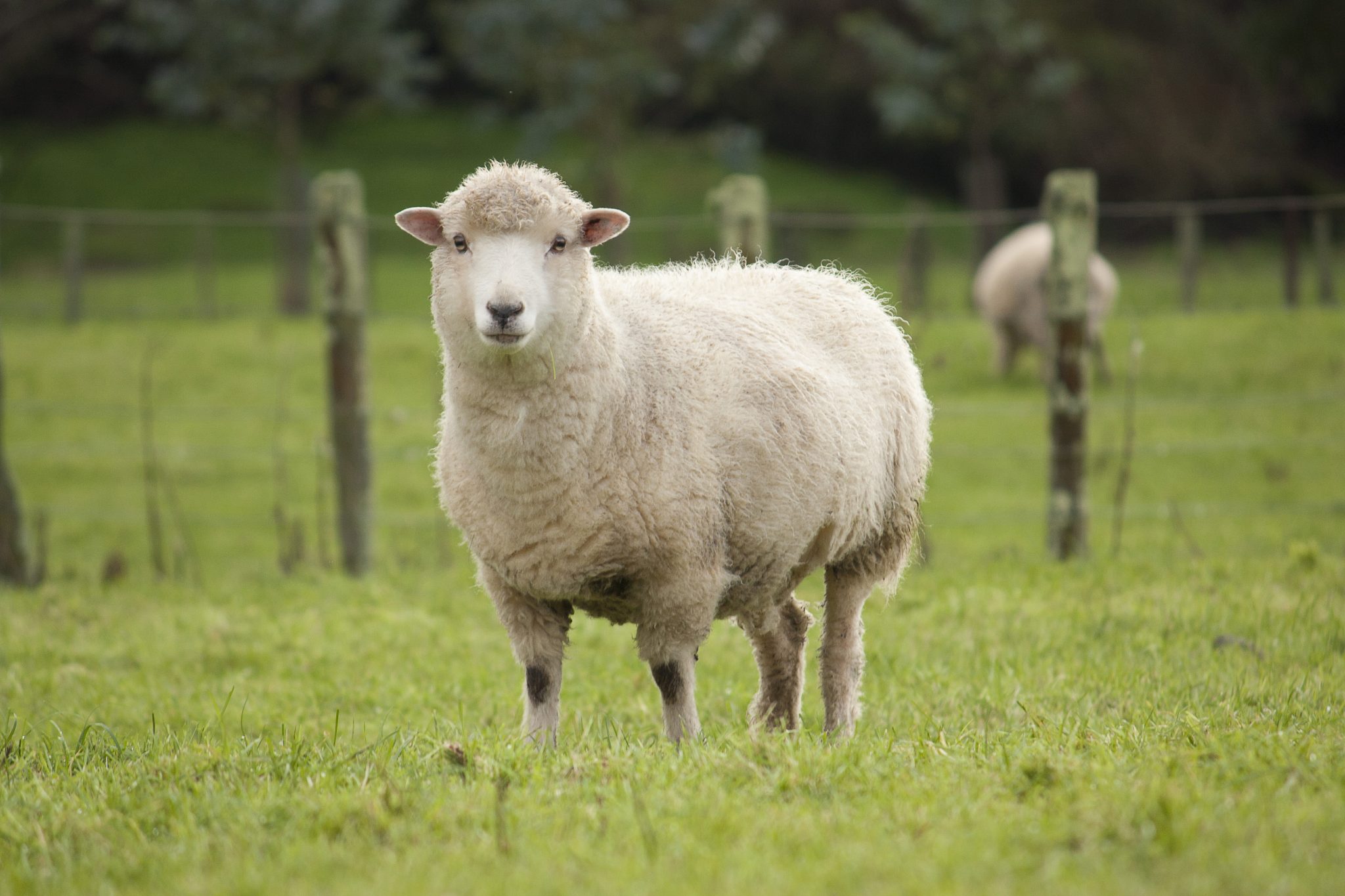
About two years later, Qingzhi had business that required him to travel to a distant place. He gathered his relatives and close associates to inform them of this. Wishing to treat them to a farewell meal, he ordered his household servants to go to the market and buy a sheep, intending to slaughter it and serve it to his guests.
The night before the gathering, the mother had a dream. Her dead daughter appeared, wearing blue robes and a white cloth wrapped around her head, with a jade hairpin inserted in her hair. These were the very clothes and ornaments she had worn while she was alive. The daughter wept and spoke to her mother: “When I was alive, Father and Mother, you loved me dearly and left everything to my discretion. Without telling you, I took family wealth as I pleased and gave it to others. I told myself, ‘This is not stealing,’ and never confessed it to my parents. Because of that sin, I have now been reborn in the body of a sheep. As retribution for that deed, I am to be killed here tomorrow. I beg of you, Mother, please spare me.” With that, the mother awoke from her dream, filled with immense sorrow.
The next morning, when the mother entered the kitchen, she found a blue sheep with a white head. Upon the white head were two spots, located exactly where a human would place hairpins. Seeing this, the mother said: “Do not kill this sheep for a while. When my husband returns, I will explain the situation and ask for it to be spared.”
However, when the master of the house returned, he began scolding the servants before even entering the house: “Why is the preparation of the guests’ food so late?” The servant in charge of the meal replied: “I intended to kill the sheep to prepare the guests’ meal, but the Mistress said, ‘Do not kill the sheep. When the master returns, I will speak to him and have it spared.’ Therefore, I have not yet butchered it.”
Wishing to serve the meal quickly, the master did not speak to his wife but immediately had the sheep hung up to be slaughtered.
Just then, the guests arrived. When they looked, they saw a beautiful girl, just over ten years of age, suspended with a rope tied to her hair. The girl was screaming: “I was the daughter of this house, but now I have become a sheep! Please save me!”
Hearing this, the guests cried out: “You must not kill that sheep! We shall explain the reason!” The guests went to find the master, but to the eyes of the cook, it appeared to be nothing more than a sheep. Thinking, “The master is angry that the meal is late,” the cook slaughtered the sheep. As it was being killed, the sheep raised its voice; to the ears of the butcher, it sounded like the bleating of a sheep, but to the ears of the guests, it sounded like the weeping and screaming of a young girl. The sheep was then steamed, roasted, and served.
The guests would not touch the food and prepared to leave. Qingzhi found it strange that the guests were leaving and asked for the reason. One of them explained the entire sequence of events.
Upon hearing this, Qingzhi wept in grief and was overcome with anguish and confusion. Shortly thereafter, he fell ill and died. He never made the journey he was supposed to take.
There is culpability in eating and drinking. When preparing food, one should wait a while before slaughtering. It is said that one should never cook in haste.
[Translation]
Yukiko Nishimura / Siro Inuzuka
This text was created by using Gemini to translate a modern Japanese translation into English, and then making some modifications. There may be errors in the English expressions. Please correct any mistakes.
[Cooperation]
Shinichi Kusano
●Japanese





コメント